
Avoid breakdowns on your machines with the right lubricating grease
Lubricating grease plays a major role for your machines and machine parts. Choosing the right grease is essential if you want to avoid inefficient operation, faults and breakdowns. This applies whether the machine is on board a ship, a tractor or a piece of construction equipment, for example.
It turns out that up to half of all machine and engine problems can be avoided with the right lubrication and the right grease. In this article, we take a closer look at what lubricating greases do and how to choose the right one.


What purpose does lubricating grease actually serve?
Let's start from the very beginning. Lubricating greases have a wide range of functions: providing good lubrication and reducing friction and wear, but just as importantly, protecting against the ingress of water and dirt.
- Friction: greases can help minimise heat generation and energy consumption
- Wear: greases can reduce mechanical wear
- Corrosion: greases can protect surfaces against rust
- Temperature: greases can absorb and transfer heat
- Dirt: greases can protect against the ingress of dirt
The most important thing is to choose a grease that is designed to work under the given conditions. Greases can, for example, be designed to work under high loads, at low or high speeds, at low or high temperatures, or to cope with wet environments.
What are the ingredients of lubricating grease?
A lubricating grease consists of three basic ingredients: a base oil, additives and a thickener. The type of thickener has a major impact on the properties of the grease.
Each thickener has different advantages and disadvantages, specifically in terms of shear stability, pumpability, heat resistance and water resistance.
What temperature range will the grease operate in?
It is important to be aware that different types of grease are designed to work at different temperatures. If you do not choose a grease that suits the temperature conditions, you risk the grease becoming too "thick" to be distributed. If the grease is not pumped around the centralised lubrication system, the worst case can be a breakdown.
What will the grease be used for?
Another thing to consider when choosing a grease is which approvals are required. Different industries can have different requirements, so it is important to find out which requirements the lubricant must meet.
You should also be aware that not all greases can be mixed. Greases with different soap bases should not be mixed, as mixing them has an adverse effect on temperature resistance and lubricating properties. You should also avoid mixing different types of oil.
Get advice on choosing lubricating grease
The properties of different lubricants vary considerably, and filling up with the wrong one can cost you dearly in downtime. On a busy working day, when lubricating greases may not be at the top of the agenda, it can also be difficult to tell one product name from another.
At Uno-X, we are very happy to help you choose the right greases for your machines. We can also help simplify your day-to-day work, so you end up with a lubrication system that uses as few different greases as possible.
We are advisers, not salespeople. For us, it is always about making sure you get the lubrication solution that gives you the best performance and operational reliability, even if that means pointing you in a different direction than us. You can rely on that.

Lubricating grease for the food industry
If there is a risk that the grease may come into incidental contact with food, the grease must be food-grade registered. This also applies to products used for packaging in the food industry. There is often a requirement for the grease to have NSF H1 registration.
What do the different terms mean?
To choose the right grease, you should understand the basic terminology. Commonly used terms include:
- Viscosity
- Thickener
- Compatibility
- NLGI consistency
- Shear stability
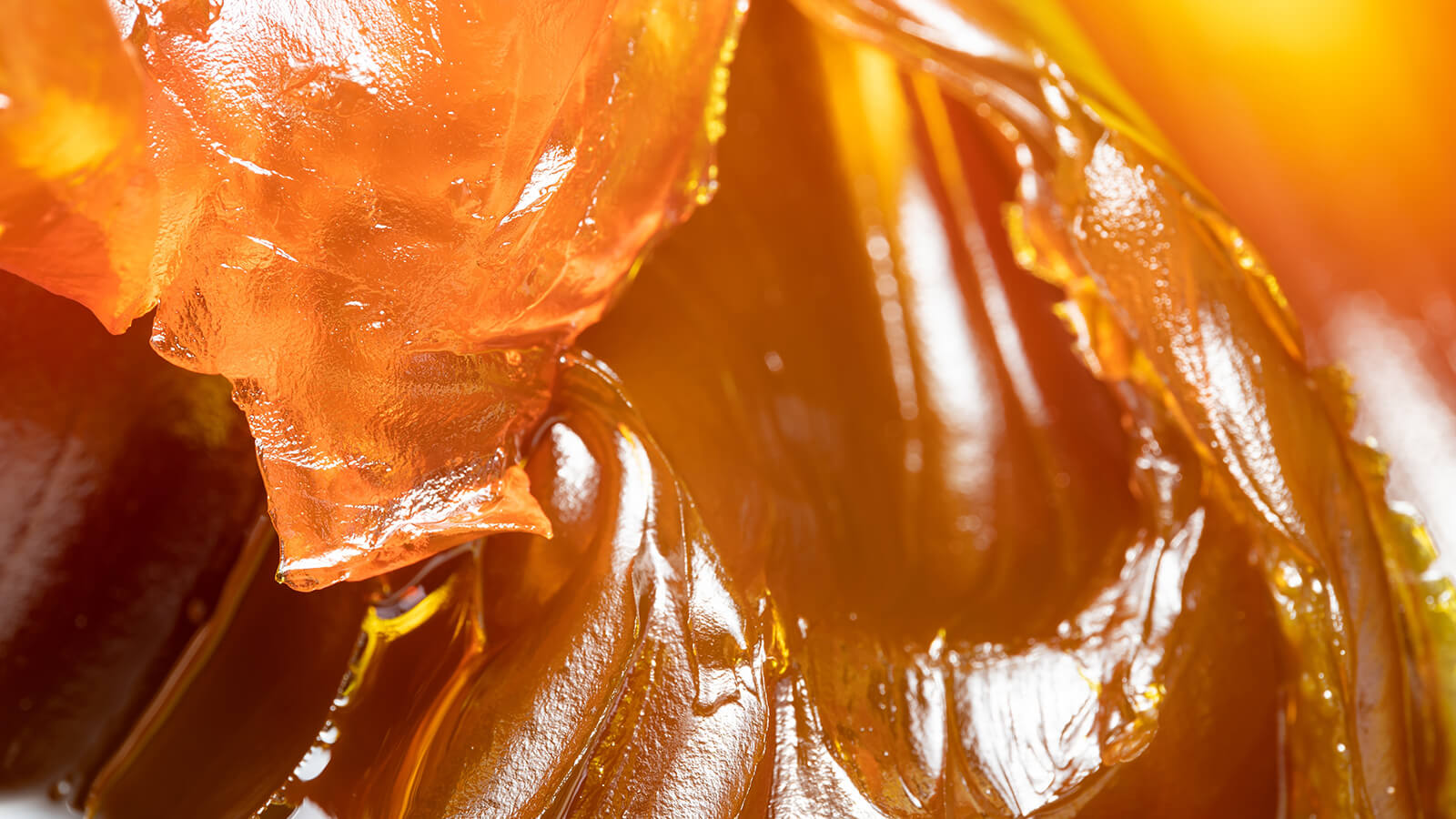
Viscosity
Oil viscosity describes how easily the oil flows. Viscosity is also described as the oil's resistance to flow, or internal friction, at a given temperature. Viscosity is the most important of all the oil's parameters. Choosing the right viscosity is essential to ensure that the oil in the grease provides optimal lubrication.
If you work at high temperatures, you gain additional benefits by choosing a grease with a high viscosity. The high viscosity helps provide better wear protection and less friction.
Conversely, you should typically choose a grease with a low viscosity if you work at low temperatures. The low viscosity gives better flow properties, for example when cold-starting machines.
Thickener
Lubricating grease contains a thickener (also called soap), which binds the grease together. The water resistance and heat resistance of the grease are mainly determined by the thickener.
There are two broad categories of thickener used to manufacture grease: soap-based thickeners (i.e. metal salts of fatty acids) and non-soap thickeners (hydrocarbon, inorganic and organic).
Compatibility
In relation to lubricating grease, compatibility refers to whether different greases can be used together without causing adverse reactions or loss of lubrication. This is important because mixing incompatible greases can lead to a number of problems, including reduced performance.
NLGI consistency
Consistency indicates how hard or soft a grease is. The grades range from 000 to 6, with the typical working range being 000 to 3. Grades 000 to 00 are considered semi-fluid greases.
Shear stability
Shear stability is a measure of how well a lubricant can retain its thickness (viscosity) and lubricity when exposed to mechanical stress and movement inside a machine.
Check the shelf life of your grease
It may sound basic, but many people forget that greases can become too old. As a rule of thumb, greases can be kept for 5 years. If the grease is older than that, you risk a loss of performance. You should therefore only buy the quantity you know you can use within that time frame.
Not sure whether you have the optimal combination of greases?
Let us help you put together the right solution for your machines and equipment. We are happy to help simplify your day-to-day work, so you have a simple lubrication system with as few different greases as possible.
Contact us today, and one of our advisers will call you.